Pinholes and pits are common defects on water-based paint surfaces, caused by surface tension imbalances. This article explores their causes and proposes corresponding solutions. As a chinese top wetting agent supplier, iSuoChem can supply a systematic paint solution for surfactant wetting additives, such as LD-8270 and WTA-245T, which can reduce surface tension in a very short time, thus resolving wetting-related problems.
Introduction
Perfect paint film effects are elusive, yet the pursuit of perfection is fundamental to all industrial and architectural coatings. However, when formulating or applying water-based paints, two annoying surface defects – pinholes and craters (also known as "fisheyes") – are difficult to manage. These defects not only affect visual appeal but can also reduce the protective properties of the paint, leading to premature failure.
Although these defects can be caused by a variety of factors, sometimes overlapping, understanding their root causes (primarily related to surface tension phenomena) will help you take a systematic approach to finding lasting solutions. This article delves into the scientific principles behind these defects, providing a systematic troubleshooting approach and demonstrating how to effectively reduce surface tension by applying advanced additives (such as substrate wetting agents) like iSuoChem silicone based wetting agent LD-8270 (an alternative to TEGO® 270) and nonionic silicone wetting agent WTA-245T (an alternative to TEGO® 245), thereby quickly achieving ideal substrate wetting and improving these problems.
Find the Root Cause
Surface tension dynamics essentially determines the formation of pinholes and craters. Surface tension is a property of liquids that causes the liquid surface to behave like a stretched elastic sheet. For a coating to wet the substrate (i.e., spread evenly on the substrate), the surface tension of the coating must be less than the surface energy of the substrate. This is precisely why a wetting agent is important.
Water is the primary carrier for water-based coatings, and its surface tension is very high (approximately 72.8 mN/m at 20°C). This is far higher than the critical surface tension of most organic solvents and common substrates (such as plastics, oiled metals, or multilayer coatings). Water's high surface tension makes it difficult to wet. A specialized wetting agent additive works by lowering this tension to allow the coating to spread.
Pinholes (Solvent Popping)
Pinholes are small holes that penetrate the coating, resembling the tip of a needle. These are typically caused by solvent popping. This occurs when the coating surface forms too quickly, causing air, water vapor, or solvent molecules to become trapped beneath the coating. When these trapped volatiles attempt to escape, they burst from under the semi-dry skin, forming craters that cannot self-level before the coating cures. This is exacerbated by excessively thick coatings, insufficient flash evaporation between coating layers, or excessive airflow causing premature skin formation. Combine a leveling agent with a wetting agent is a proper choose. It ensures a more uniform film formation, reducing the risk of such popping.
Craters (Fisheyes)
Craters are bowl-shaped depressions in the paint film, usually with edges. They are a manifestation of localized surface tension differences, a process explained by the Marangoni effect. According to this phenomenon, fluid flows from areas of lower surface tension to areas of higher surface tension. If a contaminant with extremely low surface tension (such as silicone oil, grease, or even incompatible defoamer droplets) falls onto or is present in a wet paint film, it creates a low-tension point. The surrounding paint film, with higher surface tension, is pulled away from this point, leaving a pit. Such contaminants can originate from the substrate, coating equipment, or the paint itself. The addition of high efficiency wetting agents also helps to balance surface tension, thereby preventing the formation of these pits.
Systematic Troubleshooting Approach
Consider other factors before adding more products. A logically structured troubleshooting process is the best way to ensure long-term stable results. If the above mentioned physical conditions are not met, the addition of a chemical wetting agent constitutes the simplest solution.
| Step No. |
Cause Category |
Potential Causes |
Corrective Actions |
| 1 |
Substrate & Environment |
Substrate surface contaminated with oil, grease, dust, silicone mold release agents, or workshop aerosols; low-surface-energy plastic substrates; high humidity or extreme temperature conditions. |
Clean the surface using a suitable degreaser; ensure the substrate temperature is above the dew point; control the temperature and humidity within the spray booth (ideal: 20-25°C, 40-70% RH). |
| 2 |
Application Process |
Coating applied too thickly; insufficient flash-off time between coats; improper spray gun settings (air pressure, spray distance, fluid nozzle). |
Build up the wet film thickness gradually by applying multiple thin coats rather than a single, excessively thick layer; ensure adequate flash-off time between coats; adjust spray parameters (e.g., use a larger tip size like 1.6-1.8 mm for higher viscosity WB paints). |
| 3 |
Equipment & Coating Quality |
Oil or moisture contamination in the compressed air lines; dirty spray gun or hose; excessive concentration or quantity of defoamer in the coating formulation. |
Install and maintain air-line filters/dryers; thoroughly clean equipment; check the coating's own formulation by applying a drawdown on a clean glass plate to see if defects originate from the can.
Note: Sometimes, an incompatible defoamer requires to be rebalanced with a suitable wetting agent.
|
| 4 |
Formulation Adjustment |
Insufficient addition of wetting agents or leveling agents; incompatible solvent blend resulting in excessively rapid evaporation; excessive stability of micro-foam (making it difficult to break). |
If all external factors are ruled out, the formulation itself requires adjustment. This is where targeted additives become the primary solution.
Note: Increase the dosage of the wetting agent, or switching to a more powerful one like LD-8270. It's the most effective way to correct surface tension imbalances.
|
The Additive Solution - Restoring Surface Tension Balance
Process optimization is not a panacea, especially when formulating high-strength coatings; surfactant additives are essential. These additives migrate to the interfaces (liquid-gas and liquid-substrate interfaces) to balance surface tension.
There are two main types of chemical additives:
- Polysiloxane additives: Due to their extremely low surface tension, these additives impart excellent substrate wetting and flowability to coatings, but can sometimes interfere with interlayer adhesion in multilayer systems. This type is the most common chemistry used in high Efficiency silicone based wetting agents.
- Polyacrylate additives: These additives effectively remove craters and pinholes on coatings, promote leveling, and do not significantly reduce surface tension like polysiloxane additives, thus avoiding impact on recoating performance.
If you are experiencing poor wetting due to excessive surface tension or low-energy contaminants, then a high-efficiency polyether siloxane copolymer wetting agent is ideal.
✦ Recommended Products for Wetting-Related Defects ✦ If anisotropic wetting is determined to be the cause of pinholes and pits (coatings failing to spread, shrink, or remove micro-contaminants), then using a strong wetting agent is always the quickest solution. These additives significantly and rapidly reduce the dynamic surface tension of the coating, thus helping the coating wet hard substrates and flow into micro-crevices before film formation begins.
LD-8270
Equivalent to TEGO 270
Polyether siloxane copolymer · 100% active · excellent substrate wetting & anti-cratering
WTA-245T
Equivalent to TEGO 245
Rapid dynamic tension reduction · prevents shrinkage & pinholes · recoating compatible
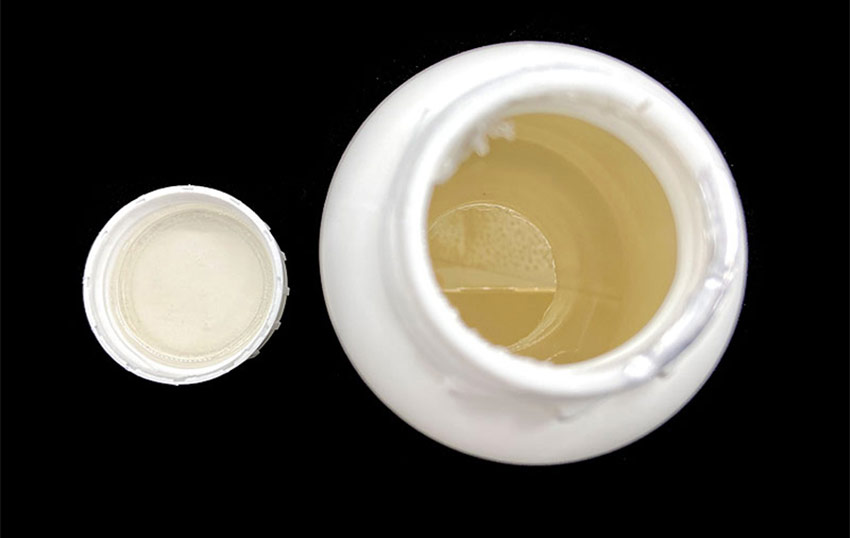
These high-tech additives are 100% polyether siloxane copolymers. They are designed to provide powerful synergistic effects:
- Rapid Surface Tension Reduction: They effectively reduce the surface tension of the coating to below the surface energy of the substrate, thereby promoting immediate spontaneous wetting of the coating.
- Anti-Shrinkage and Pinhole Removal: They promote the formation of a uniform film from the outset and minimize pinholes and shrinkage. A quality wetting agent ensures the film remains continuous.
- Excellent Anti-Cratering Effect: By establishing a uniform tension field and inhibiting Marangoni flow that leads to pitting, they allow the coating to "ignore" or flow away from micro-contaminants.
- Wide Applicability: They are effective on difficult-to-coat substrates such as plastics, metals, glass, and wood.
- Good Recoating Properties: Compared to other silicone coatings, their formulations are designed to reduce potential problems with interlayer adhesion.
How They Work
iSuoChem wetting agents LD-8270 and WTA-245T align their molecules at the coating-substrate interface. They reduce the contact angle and spread the liquid into a continuous, uniform film. This ensures that subsequent leveling and solvent evaporation stages occur on a fully wetted substrate, thus minimizing the formation of pinholes (caused by uneven film formation) and pits (caused by dehydration around particles). The recommended addition is typically 0.1% to 1.0% of the total formulation weight. So it's making the wetting agent a cost-effective solution for high-end finishes.
Conclusion
While pinholes and pits in water-based coatings are annoying, they are not insurmountable. They are manifestations of underlying physical forces—the interaction of surface tension. By systematically eliminating process and environmental factors, applicators and formulators can pinpoint the root cause of the problem. In most cases, the culprit is excessively high surface tension of water, preventing it from adequately wetting the substrate.
In such cases, advanced additive technology can effectively address this issue. Silicone based wetting additives LD-8270 and WTA-245T are reliable choices for restoring surface tension balance. They rapidly reduce surface tension, allowing coatings to be applied evenly to the substrate without dehydration, resulting in a uniform film and ultimately achieving high-performance coating results that meet modern standards!
✨
Technical note: High efficiency wetting agents LD-8270 and WTA-245T are suitable for water-based industrial coatings, such as automotive refinish paints, wood coatings, and general industrial coatings. Always check compatibility and system-specific dosage requirements.
— China Wetting Agent Manufacturer: iSuoChem, a surface chemistry for flawless finishes.